Showing posts with label character driven. Show all posts

Sunday, October 24, 2010

Never Let Me Go


Never Let Me Go is a cold film. It's beautiful, sure. But it's cold. The only warmth and tenderness (quite intentionally) comes from the interaction between Kathy and Tommy. Circumstances both familiar and strange keep them circling each other, but their affection is always readily recognizable. This is a film of subtlety. Even when you long for it to smack you over the head with grandstanding bravado, it takes its time to simmer slowly. The first act echoes this. It should be slimmer. We spend time with the three leads as children. Even though the adult trio of Carey Mulligan, Andrew Garfield, and Keira Knightly easily overshadow their younger counterparts, the film holds fast to the story and character development.

The story's science and politics didn't interest me. I wonder if they even interested the writers. What kept me involved was that warmth and tenderness in the performances that conveyed those feelings in the midst of cold beauty. Carey Mulligan and Andrew Garfield are real talents. These two can win Oscars (the new Spiderman be damned). Their work here isn't flashy enough to stick in the minds of the Academy, but it stuck with me. Love found too late, but found nonetheless is the crux here. Its because the science and the politics are secondary issues to their relationships that the film works.

***1/2

Thursday, May 14, 2009

What Doesn't Kill You


What Doesn't Kill You is an actors' showcase for it's stars and a fine drama for any interested in honesty over style (or honesty as style). Their isn't much pizazz to the way the filmmakers tell this story, but there is plenty to love about writer-director Brian Goodman's autobiographical tale of men making or avoiding the tough choices that make good men just that. I get a sense this is how "organized" crime really works. Strip away the style and larger than life characters of The Sopranos or Goodfellas and I suspect you'll get WDKY - mid-level lackeys miserable and depraved with only the notion that it's supposed to be better to move them on to each new day.

Ethan Hawke has never been better. The twitchiness to his "method" is toned down and instead of the sniveling loser or dreamy eyed slacker, Hawke becomes a witty, dangerous man with vague ambitions and no smarts to achieve more than he's already know. Lead Mark Ruffalo is excellent as well, lending an intensity and vulnerability to his character. Goodman has an ear for authenticity and a no-nonsense sensibility, but he needs to learn dramatic pacing, editing, and develop a more captivating aesthetic to match his actors' skills. I'll say this - he can cast like a crackerjack. The child actors who play Ruffalo and Amanda Peet's (solid as usual in a supporting role) quietly suffering offspring. They don't show off. They're not playing at anything (over-thinking, over-physicalizing, etc.), they're just being real kids in a rotten situation.

WDKY hit me like a ton of bricks, but it's dramatic finale was stale - a kin to a Movie of the Week. It's as though Goodman, in wanting to avoiding a Hollywood ending, didn't know how to provide any sense of closure to match everything that came before it. Still, for the performances and the real dramatic heft to it's story, WDKY (kudos for ending the title at that) is one of my favorite films from 2008.

***1/2

Wednesday, February 18, 2009

Let the Right One In


Let the Right One In is the vampire movie Hollywood would be terrified to produce. It's a character piece that moves at a slow pace as to allow its hero and heroine to evolve naturally. It has its moments of terror, fear, blood, and gore like anything Hollywood produces, but it is also content to follow quiet and honest exchanges between preteens. One of them just happens to be a vampire.

It's hard to place a horror movie, especially a vampire movie, into the category of realism, but Let the Right One In is the closest to vampires in the real world as I can imagine. Being a vampire is not cool. None of them are proud of it. It's like a mark of shame that separates them from anyone else except for their own kind. Unlike the more recent of successful vampire franchises, these vampires don't hole up in expensive mansions or live in covens or what have you. The young vampire girl lives with an older (and increasingly less useful) vampire in a crappy apartment building. She goes out only at night and is fearful of any real connection and her need to feed on human life (and apparently vampires have an unpleasant odor).

Calling the style "realism" cannot take away from the artfulness of the film. It's cinematography, acting, and plotting are all expertly conceived and executed. It's a lovely film in the midst of the its own carnage.

What sets it apart, among other things, is the care it takes to tell the story of the friendship and young love between a 12 year boy and the vampire girl. It's adorable and frightening. The quality is in the details that could be easily missed. The young boy's nose is always running. She is always quiet and looks sad and lonely, even after ravaging passerbys. Their connection, like most first loves, is awkward. This isn't a storybook romance. And it is a strange tale. You are likely to feel uncomfortable for some if not all of its runtime. But, as a beginning horror genre fan, I was happy to tag along. Even when the film approaches its sensational extremes, I was pleased to see it end the way it did. As it stands now, it is one of my favorite films of the year.

Thursday, November 20, 2008

Rachel Getting Married


Be prepared for heaps of praise. I've been overusing the term "organic" lately, but Rachel Getting Married is certainly worthy of such a designation. There is not one false note in this film (perhaps to a fault). It is filled with lived in performances from an excellent cast deserving recognition come awards season. Chief among the standouts is Anne Hathaway. She stunned me with her vulnerability and willingness to leave her character to be interpreted and felt by the audience. Her character is not immediately likable, and she is certainly the catalyst for poking of the raw nerve of the family. She reveals her character slowly. I thought I had her pegged within the first 15 minutes, but there's depth to her and her relationships with her immediate family. Rosemarie Dewitt, as the title character, offers up a great supporting performance full of honesty, hurt, love, and tenderness that notes the breakout of a wonderful new talent. Family tragedy plays a large part to the raw nerve, but director Jonathan Demme and writer Jenny Lumet allow for the details to reveal themselves in fresh, real ways culminating with Anne Hathaway's Kym's harrowing confession to a support group. There's much to rave about when considering this film, but perhaps the biggest praise I can offer is that I not only watched this film but also felt every moment caught in the camera's grasp. Rachel Getting Married is a bare bones indie. There's not much style to it visually, though it certainly isn't bland. Rather, Demme allows the camera to be an unobtrusive voyeur in this family's intimate moment. The wedding rehearsal dinner might have gone on too long, but I chalked up its length to the revelation of these characters through unknown eyes and histories. And you better believe that there was a horror in my heart the moment Kym reached for the microphone. The wedding reception, also, may have run a bit long, but by that point in the film I had given myself over completely to these characters and their moment. I also was wonderfully aware that it was the coolest wedding I have ever seen. Rachel Getting Married understands and portrays the great complexity of familial love, resentment, regret, and heartache like no other film this year.

****1/2

Tuesday, June 17, 2008

The Savages


I had heard mixed reviews for this movie for a while, but I read the script for my screenwriting class and really enjoyed it. The movie was its own kind of pleasure. I think since I can relate to having a loved one in a nursing home with dementia, the character echoed my parents in ways I couldn't see before. The guilt. The awkward, heartbreaking goodbyes after short visits. The struggle to see your parents weak and frail and dying. And family. Another family movie that speaks to the strange ties that bind. Thick blood that sticks to everything even when it hurts. This is strong writing. This is strong acting. Laura Linney has her own brand of theatricity, but she is, to borrow a classic critic cliche, a winning performer. Her acting is specific to her and I can say with a smile that she played her character in a way no other actress could have. She's not imitating anyone. And after seeing Phillip Seymour Hoffman in his spectrum of quality performances this year (Before the Devil Knows You're Dead, Charlie Wilson's War), I'd have to say that his work as John Savage is my favorite. It's not the gritty drama of BTDKYD, but it offers its own kind of drama. The chemistry between Hoffman, Linney, and the fine Phillip Bosco as their father is palpable. He's able to create a conflicted character that easily could have turned into the "evil brother". Instead, there was a helpless sadness to the guy that seemed all too familiar. There's comedy, but this is really a drama through and through. And rewarding at that.

****

Sunday, March 23, 2008

In Bruges


This movie was a very pleasant surprise. The trailers try to pass In Bruges as a madcap, dark, edgy, action picture a la Pulp Fiction or Snatch, but it turns out In Bruges is quite melancholy. It's a character piece, with the two hitmen (Colin Farrell and Brendan Gleeson in excellent performances each) being the chief draw. What makes these men tick? How do they handle conflict? These aren't the questions most hitmen movie even bother asking themselves. Bullets, pizazz, and edgy editing are the norm. In Bruges is anything but.

Sure, all the stuff in the trailer is in the film and it can be quite un-PC and irreverent quite often (sometimes strangely and offensively), but that doesn't distract from an interesting story about two men and the drama that comes in the form of regret, grace, vengeance, honor, and ambiguity.

The film can be a mess at times, but it's a organized mess. Things add up.

There's a doozy of an ending. A surprise without a twist. The kind of ending that leaves you a bit hobbled, stuck considering many things after the credits abruptly begin rolling and the theater lights come up. How many hitman movies can you honestly say leave you really thinking after they're done?

****

Monday, March 17, 2008

Fierce People


This is a disappointing film not so much because I had high hopes, but because I spent two hours of my life on it.

A shallow coming of age movie pretending to have emotion weight and truths loses track of itself after it jumps into the world of these "fierce creatures". Character motivations are unclear and forced in a way that made me think maybe I had missed entire scenes that could explain actions or people that were never satisfyingly explained. People behave in ways that further plot rather than moving from a character's center or voice. The film hinges on a twist that is meant to surprise and enrage and change us, but in truth we always suspect that it was so even though we never believe the reason given for it being so.

The only highlight comes from the lead - Anton Yelchin. He seems to be a young actor of the moment and delivers a performance certainly deserving of a better film.

**

Snow Angels


This film had moments of real truth and others that rang false. When it was on, it was devastating. When it was off, the reality of the film is broken - odd given my next statements.

This film features broken people trying to do right, to be happy, to pick themselves up again, and then failing miserably. Then there are glimpses of hope, happiness, and simple pleasures before we are again reminded for the last time the effects of brokenness, mistakes, regret, and the like. That is the last thing we see before black and it is the feeling we leave the theater with. Life goes on, but it slows down and hurts for some of us. At first I thought the film had a cynical outlook, but now I'm thinking it's a realist film. Bitter and sweet at the same time.

It's not David Gordon Green's best film, but certainly nothing to be ashamed of. I was entertained and provoked into thought. I laughed. I didn't cry, but wouldn't not have felt manipulated if I had. This movie is honest even when the acting and the dialogue feel fabricated. Kate Beckinsale (who I like) is miscast. She doesn't fit in with the location, her co-stars, etc. She can cry, but the dramatic dialogue is case-in-point for the awkwardness that rubbed off on others (Nicky Katt especially).

I did love Sam Rockwell in the movie. He makes interesting acting choices. Even when he dangles over the unbelievable line, he keeps one foot rooted in reality. And the two young actors are case-in-point of the truth the film always finds its way back to.

***1/2

Monday, November 12, 2007

Lars and the Real Girl


Lars and the Real Girl is the biggest surprise of the year so far. It somehow manages to take what on the surface seems like a "frat pack" movie (man falls in love with a sex doll) and turns it into something tender, heartbreaking and emotionally resonating.

I am positive that the movie takes mental illness and skews it to its own benefit, but using the doll as a extension of Lars problems proves to be a convincing ploy. By all logic and expectations, I should have no connection to this inanimate hunk of plastic; but I grew attached to her so much, I think, because I knew as the townspoeple did that Bianca was so important to Lars who was important to them.

The film also portrayed the townspeople and Christians as caring, helpful, and decent people. I want to move to that town. It doesn't exist, but write me into a town where people care that much about their neighbors.

The second best film of the year so far behind Zodiac.

****1/2

The Darjeeling Limited


I was drawn into the movie through its characters, distinct from each other in mannerisms, speech, and habits, but connected in a storied relationship crafted with a history that is revealed naturally instead of overtly. The characters' bond with each other becomes all the more clear when a tragic event takes us back into their last shared tragic event so that the audience can see that although these people are tied together chiefly by blood, their love becomes apparent when something hard, sad, and quieting happens.

I also believed that traveling on a train with my two brothers across a foreign country could alternately be the greatest and worst times I've ever had.

****

Sunday, October 28, 2007

Days of Heaven "Trying to understand why (Days of Heaven's) characters said "yes" is where the unique interest lies."


Watching Days of Heaven was an experience unlike any I have had before. I think I about threw up from all the gut-wrenching drama - a distressing nausea I embraced.

I got to watch the wonderful mind of writer-director Terrence Malick (The New World, The Thin Red Line) at work and finally see what all those David Gordon Green comparisons were about. There is a splendid and awe-inspiring poetry to Malick's films. While his films follow a narrative structure, they pause for the beauty of nature, stolen moments in the characters' lives, and alternatively plain-spoken and poetic or philosophical voice overs.

For the first time, I saw a Malick film in which there was a singular narrative voice-over. Bill (Richard Gere) and Abby's (Brooke Adams) daughter ( tells the story of how they left Chicago and headed out west to work the fields of a wealthy, lonely farmer (Sam Shephard). The farmer is dying. He begins to fall for Abby. Soon, Bill is urging Abby to wed him so they can become rich off of his money once he passes. But he lives longer than anyone expected and the growing tensions between the three create the gut-wrenching drama I mentioned earlier.

Brooke Adams is not very attractive to me (I think it's her mouth line that does it for me), so I had to look through the eyes of the men in the movie. And I began to see some of that indescribable "somethin'" she possessed. I still wouldn't have married the woman, but that's mostly because I knew the scheme.

Because I knew the scheme, I felt pain for the farmer that he could not yet understand. Here was this supporting character that's only shortcoming was that he fell for the wrong woman. I liked Bill and Abby in spite of their awful sins, but I really pulled for the farmer. What a great guy! What a raw deal!

A dramatic question was posed by the film (would you push you lover into a new marriage for money?) that reminded me of another dramatic question that still rushes through my mind every so often (The Big Chill asked if you would push your husband into impregnating a friend). These questions wielded much different results in their respective movies. I can assuredly answer "no" to both, but trying to understand why each film's characters said "yes" is where the unique interest lies.

****

Dan in Real Life "I was able to relate to this blunt sting of emotion that comes with angst and sharp emotions. Adult angst."


When I was watching this movie with my mom on Saturday the word "saccharine" came to mind. Partly, it was because I wanted to seem smart, even to myself. Partly, it was because it fit. Dan in Real Life is sweet, but not so sweet that it rots your teeth. Instead, it was the kind of sweetness that left my spirits buoyed about the possibility and necessity of love the way only the fictionalized world of film can do (that's both sad and pleasing).

In short, Dan is a columnist, widowed dad of three young daughters, and part of a larger family of brothers and sisters, nieces and nephews, and parents that gather together to close down their lakeside house for the year. Dan has a meet-cute with Marie (Juliette Binoche), who he really likes but is dating his brother (Dane Cook). Dan tries to balance his new elation and hope for this woman with his devotion to his brother and temperamental daughters. The emotional turmoil that ensues equals hijinks and emotion that entertain and satisfy that warm, fuzzy part of my being.

The film doesn't stray much from the order of events you'd expect from the set up, but what raises this film above the trappings of a sitcom or cookie-cutter rom-com is its strength of characters (particularly Dan and Marie) and strict believability in the way the characters handle the events while still maintaining the genre's sensibilities.

Steve Carrell continues to show depth and range beyond what he became known as on the Daily show - the clueless but endearing and pleasant buffoon. That continues in The Office (albeit with a more room for development). Now that he's in films that embrace his range, I'm beginning to latch onto his skill and persona. His solid work in Little Miss Sunshine was deserving of more recognition and his work as Dan only serves to further his nuanced forty-somethings. His Dan is going through growing pains normally attached to adolescence - the thrill of impulsive love - that somehow link a diverse audience to this family man. I don't have kids. I haven't lost a wife. But I was able to relate to this blunt sting of emotion that comes with angst and sharp emotions. Adult angst. It makes for a very good character.

Julliette Binoche, whom I must admit I just recently discovered in her small role in Paris Je T'aime, makes up the other half of this interesting infatuation. I am amazed by her subtle specificity. Her face carries so much information on it in action and reaction that I thought I could read her so much better than many of the female characters I have seen in more traditional rom-coms. She's also believable. Even when Dan and Marie's interactions are pulled directly from the rom-com rulebook, she and Carrell are able to give a sense of spontaneity that rings much truer than what I've seen before. The fact that I really, really liked her and Dan made me really pull for them. And because of that, the conflict was all the more involving. Conflict without investment in the characters and situations surrounding it is fruitless.

Eventually, the film does pull off one of those familiar sweet as candy endings, but by then I was so rooted in the characters that I was able to dismiss (well, mostly) the derivitive nature of the moment. The fact that the ending is open and closed shows off some of the films respect for its characters.

That respect extends to the family as well. The family interactions are familiar, but still ring of authenticity in the relationships. Family members are uniquely pleased and annoyed by each other because there is that foundation of love. So, even when characters respond in ways that further the conventions of the genre, I was satisfied that a loving family was being portrayed in that it saw one of its members struggling and reacted in a way related to truth from that ideal.

It's a solid, crowd-pleasing movie that left me smiling. Among all the rough and tumble of the films at the multiplex this time of year, I was very happy to leave a film not only excited about production values, acting, directing, writing, thrills, chills, sadness, and relevancy, but also for the good I felt coursing through me as I walked out of the theater.

****

Wednesday, October 17, 2007

Ordinary People


For the longest time, the only time I heard about Ordinary People was when people mentioned that it robbed Raging Bull of Best Director and Best Picture Oscars in 1980. Then I saw Timothy Hutton in Beautiful Girls a while back and tried to find out what he's all about. Turns out he won a deserved Best Supporting Actor Oscar in 1980 for Ordinary People. "Huh," I said. "I oughtta see that." And now i finally have.

Ordinary People is a film boiling over with emotional truth. The ordinary people of the title are relatable. I could know them. I could be them. I certainly saw parts of myself in characters.

The film is about a family struggling to connect and keep a sense of normality after the accidental death of one son and the attempted suicide of another. That's enough to make any family crack. And they certainly do.

Hutton plays the son, Conrad, who attempted suicide. The film starts as he is going back to school at the beginning of a new school year. He received the Oscar for a supporting role, but his story anchors the entire film. He carries it. Everybody else helps, but he shoulders the best of it.

He delivered a big, bright, and amazing performance. Somehow he was able to stare blankly at nothing and convey an avalanche of thought behind his eyes. His awkwardness and anger in therapy scenes with Dr. Berger (Judd Hirsch) were accurately and believable performed. What really struck me in those scenes was the details he put into inflection, stops and starts, and change in emotions that were impeccable.

Hirsch played the dream psychiatrist, one who pulls you through your reluctance and resistance to a place you could never have reached on your own. It might be a movie myth - this amazing type of psychiatrist. But it certainly works in Ordinary People.

I liked that the love story between Conrad and a co-ed (Elizabeth McGovern), although helpful and ultimately rewarding, was shown as a brief interruption from troubles, but ultimately not the answer. A lesser movie would have made the journey to revelation for Conrad be with his girlfriend and not his psychiatrist.

Conrad's parents are a mess. They're able to fake pleasantness and stability, even happiness, but it's all just an escape from all the shit that keeps happening around them. The father Call, played by Donald Sutherland, is attempting to address the hardships head-on. The mother Beth, played by Mary Tyler Moore is trying to get over it all and get on with their lives.

The parents are a flip on conventional parental and gender roles. Cal is worried, nurturing, loving, and supportive. Beth is emotionally distant and/or callous, and wants to gloss over the past in favor of a happy future. This displays a characteristic common to all the characters and performances. They are all complicated, layered, and detailed.

I've never seen Sutherland like this before cautious, questioning, contemplative. And his work as a father fits him well. It's hard when an actor's been around so long that and the young people (myself and contemporaries) are only familiar with his work in Outbreak, The Italian Job, and The Puppet Masters. He's good.

Moore is amazing in this role. It's the performance of a lifetime. Her Beth is complicated and maddening but still sympathetic somehow amongst all her transgressions. When her characters was finally revealed as weak, the revelation clarified everything that preceded it and acted like a magnifying glass on Moore's perfect gift for imperfections.

Robert Redford directed the movie and handles his performers exceptionally well. His handling of flashbacks and memories was less successful. The echoed voices, the fuzzy outlines, the quick cuts - it's all too conventional and too showy for a movie that is able to understate other big themes and performances so well.

This movie was like therapy for me. The aftermath of a suicide attempt is familiar. The loss of control. The way others handle you with kid gloves that bothers ya', or bothers ya' when they don't. And most familiar was the struggling with what confronting real, raw, and honest emotions will mean. Ordinary People does it all so well.

Good Will Hunting and American Beauty owe debts to Ordinary People. They didn't steal from it, but they still owe a lot.

****
Sunday, October 14, 2007

Michael Clayton


Michael Clayton is a top-notch legal thriller from the mind of writer/director Tony Gilroy (he of the Bourne franchise fame). I sat down in my theater seat expecting a solid movie, but what I got was one of the best films I've seen this year.

Michael Clayton (George Clooney) is the protagonist of the title. He is a man down on his luck and searching for a way to keep his head above water after a bar business never gets off the ground. He is a reforming gambler. He is also the go-to "janitor" of one of the biggest law firms.

A janitor is a lawyer who cleans up other lawyers' and clients' messes. He does not go to trial. His job is to make sure everything is not a disaster by the time the transgressions go to trial or avoiding trial altogether.

His current dilemma in the movie is fixing the ruins after one of his colleagues and friends strips naked at a deposition in a three billion dollar lawsuit against a major farming corporation.

It seems that Clayton's friend, played with manic fear, energy, and sparkle in his eyes by former Oscar nominee Tom Wilkinson, went off his medication around the time he had a mental breakdown/epiphany that threatens to destroy the case. Clayton is sent in to do damage control.

The threat is looming over chief council for the corporation played with nervous energy by Tilda Swinton. As she loses hold over the case, she struggles to contain the damage in more questionable ways than Clayton is pursuing.

It seems everybody is unhinging. As Clayton learns more and more about the case, he watches more of his professional and personal life unravel around him. The real mystery of this thriller is not who is going to get hurt or who is at fault for inflicting the damage, but rather what kind of man Michael Clayton is. He becomes faces with a crisis of conscience, which is especially difficult for someone whose conscience has been pushed into the background for so long.

Unlike the John Grisham thrillers that every critic seems to compare Michael Clayton to, Michael Clayton does not use one shred of heavy-handedness or exploitation of its genre conventions. Instead, the film boils slowly at a deliberate pace. Still, I was amazed very early on how tight the film's plot was. There is not an ounce of fat on it.

That is because the film's exposition and characters develop slowly at a natural rate of revelation. Nothing is rushed or forced. Every little detail begins to matter. Not in the way a mystery unravels, but in a way that the details tie together motives, morality, and world of the characters.

Clooney and Wilkinson deliver Oscar-caliber performances in Michael Clayton. Their scenes together burst with tense verbal fireworks. Gilroy and the actors are aware of the necessity of good characters.

Clooney especially gets to display some of the intensity he showed in his Oscar-winning role in Syriana two years ago. He is at his best handling heavy dialogue with either intensity or cool levity. The former is the case here. He does not disappoint.

Eventually, the film culminates in a showdown too simple and familiar to satisfy my growing love for the film. However, it follows suit with the importance of details. Everything before it leads to the finale. Still, the script, which had been so effortlessly smart and fresh throughout, showed a bit of strained effort at the conclusion.

It is still a tad early to be making top ten lists for 2007, but I would not be surprised if Michael Clayton makes its way onto mine.

****

Saturday, September 29, 2007

A Simple Plan


If movies have taught me anything, it is that keeping a big bag of money will only make things worse (unless you're the English boy in Millions). That is the lesson learned from A Simple Plan, a movie where problems arise and only get worse at every turn.

1) Don't trust anyone. 2) Don't think you're smarter than everybody else. 3) Don't get anyone else involved. 4) Don't pretend no one will get hurt. And 5) never ever make a plan. Or, if you want to make a nail-biter of a movie, do the opposite. It worked in A Simple Plan.

Hank Mitchell (Bill Paxton in his only good performance...ever) and his brother Jacob (Billy Bob Thorton in a time when he wasn't typecast as the disgruntled, mean a-hole in buffoonish comedies) and Jacob's drinking buddy find a crashed plane with a bag containing millions of dollars in cash. They conspire to keep it, though Hank has to do the thinking for the others who are greedy and dream big immediately. Soon, Hank can't think fast enough to avoid the schemes, mischief, and mistakes his co-conspirators make on the path to financial heaven.

Money changes people. Or, sometimes it just plain ruins them. The path to ruin is where the film is particularly engaging. I found a strange fascination with watching the plan spin hopelessly out of control. It was like slowing down to look at a car wreck as you pass by. Only in this case, I got to see every misstep along the way. These are not bad people, per say. They are just people who keep digging their own graves by making stupid decisions and not following my list at the beginning of the review.

I actually loved the writing of the film. Even as the characters did horrible things, I rooted for them to pull out of the film with some hope even though it went against my conscience and logic. That's part of the dilemma the characters face: to try to be logical about an act/plan that will never submit itself to logic. Or maybe the lesson is that logic doesn't bend to the whims of men. Or maybe the lesson is don't take what isn't yours. Billy Bob Thorton creates a dim-witted, kind-hearted, drunk, social disappointment who I couldn't help but let my heart break for. There're layers to the character. His loyalties, intelligence, will, and love are tested. And all along it is clear that he isn't up to the task.

And Bill Paxton...Bill Paxton...Bill. Well, he's ruined many a fine film. He's even ruined many a bad film. But he doesn't do anything in A Simple Plan that ruins the quality of the film. Actually, my heart pounded every time I saw his look of distress. And that look abounded. I can't say that a different actor couldn't have done just as well or better, but he did well. Let it be known that Bill Paxton is capable of something better than the crap he usually turns in.

And scrappy little Bridget Fonda...what a good time. Her sudden turn into the scheming, conniving, Lady Macbeth was stunning. The very model of sweetness with a belly big with child switches into a would-be mastermind funneling ideas and dreams into her husband every time he loses faith.

The film struggles in its climax to keep the same quality of acting that it carried throughout, but it's a true diamond in the rough. It's also nice to see Sam Raimi do something other than his horror/comedies and superhero flicks. He can do all sorts of good.

***1/2

Friday, September 21, 2007

The Last Days of Disco


The pleasure of watching a Whit Stillman film is not reliving my past or seeing my future. The youth he portrays in his films is very different from mine. I am not bourgeoisie. I am not in love with disco. I am not from a rich family. I have not read many facinating books. I am not like the characters depicted in these films (Barcelona, Metropolitan, The Last Days of Disco), well, not really. But I recognize these types. I know people, you know? And the realities of the people in Stillman films are not all that different from the realities of people I know, and, well, me too. I admit. I'm like these Disco lovers. There is wonderful pleasure in watching Whit Stillman's work.

Like the group of revolving friends and lovers in The Last Days of Disco, I too have experienced the need to fit in, or in the case of these characters, getting in. They're too self-absorbed to realize that the place they want to get and stay in - the place where they have fun, dance, drink, fall in and out of love, be good friends, and be bad friends - is dying. Disco and this club that they frequent symbolizes the folly and seriousness of youth. And not adolescence. Not being in college. Like few filmmakers, Stillman has a keen sense of the way post-college feels (or what I imagine it feels like). Along with other film's depictions of youth, The Last Days of Disco portrays the urge to fill others expectations of you, or maybe to change how others see you, or maybe even to change the way you see yourself. All of the above. None of the above.

The truth is, these characters only flirt with change. They approach it, but like one character says about the Tramp of Lady and the Tramp, no one really changes. Their context can change, but people never really do. It's a cynical view of society, but the film backs it up.

A Stillman staple is a witty, sophisticated banter/dialogue between characters. What's intriguing is that I've never really heard people in real life talk this way. Even the most mundane, accidental conversation seems planned. But it's never forced. And somehow I believe it. Somehow the reality and truth always shines during even the most artifical scenes.

Sample witty dialogue: Des McGrath: "Yuppie stands for 'young upwardly mobile professional'. Nightclub flunkie is not a professional category. I wish we were yuppies. Young, upwardly mobile, professional. Those are good things, not bad things."

The Last Days of Disco is Whit Stillman's best film. Not only does he guide his best cast to date, but his organization and handling of the distinctive personalities of the film's multiple characters is amazing. Each is complex. Each is real (you know, in that sort of artifical way I semi-explained earlier). And though his other films showed a insight into the life of the privileged, he has never before so accurately displayed an atmosphere. Apparently, Disco was contagious. I never got it before. "Disco?" I asked. "Ugh! Yuck!" I shouted. But it looks like fun. There, I said it. "Disco looks like fun."

****1/2

Wednesday, August 29, 2007

You Can Count on Me


If for nothing else, see this movie for the performances. Mark Ruffalo, Laura Linney, Rory Culkin, and Matthew Broderick are wonderful. Family relationships are probably the most portrayed out of any relationship in cinema (except maybe for a romance), so there can be an attitude of "been there, see that" when it comes to those relationships. But it is rare that a movie so accurately captures the frustrations, undying love, anger and other emotions that come from the ties that bind. I utterly believed these people could be related. Sibling relationships take may different directions in cinema, but it is so very precious when the back and forths of Sammy and Terry are brutally, lovingly, and truthfully portrayed.

I hold Mark Ruffalo's performance as Terry as one of the best performances in film that I have ever seen. There's so much rawness in his Terry. He is quick to anger, but displays a tenderness that makes the character complex. For the longest time, through 13 Going on 30, Windtalkers, and the other peformances since Terry, I was worried Ruffalo could never match the skill he brought to this performance. Then I saw Zodiac and breathed a sigh of relief. Both the lead performances are very likable. Laura Linney hasn't matched her great performance since her first Oscar Nomination, but she'll always have Sammy. Her loving, head-strong, and nurturing character is one for the books.

This movie is full of great scenes where characters just talk. They sit, they stand, they lean on something, but most importantly they talk. They are witty, they are broken, they are hurtful, they are sorry, but most importantly, they are real. Put Linney and Ruffalo on screen and just watch them click, watch them work with each other, challenging the skills of the other and always meeting those challenges. It's wonderful casting and excellent writing. I want to take the scenes, the moments, and frame them and hang them up on my wall next to whatever art and movie memorabilia I have accumulated over the years.

I also want to note how well the movie portrays religion. The writer-director, Kenneth Lonergan, plays a priest in the movie. Even though he is quiet and somewhat aloof, he represents a man of the cloth offering good, solid advice, and truly searching to help and guide the people around him even if it means they find their meaning of life outside where he has found his. Believers are shown as fallible, struggling with their faith and sin. There is shame, regret, and guilt. There is love, trust, and hope. The film is able to show Christianity and not focus on it, to show that Sammy is more than just a church-goer, that Terry is more than just a non-church goer, and that it's hard to be good when it's not Sunday morning.

****1/2

Hollywoodland


I was hoping, deeply hoping, that the hype surrounding Ben Affleck's performance in Hollywoodland was earned rather than the product of the a comeback-hungry press. It turns out it was the latter. All the performances are sub par, including the capable stars (Adrien Brody, Ben Affleck, Diane Lane). The film takes place in the late 50's-era Hollywood. It seems as though the actors watched a couple movies, checked out TV shows, and read a couple books from the era that were supposed to teach them how to sound authentic. Instead, they ended up so concerned with their characters accents and posturing that they neglected to invest themselves in what is not readily seen in the mannerisms and voice inflections. The performances are not above the acting we would see in a TV movie of the week depicting the same story. Certainly, this is not the kind of work I expect from the stars of this film. I can say that Bob Hoskins was good in a small role.

This is a bit cold, but the film didn't make me care about George Reeves death, the mysteries of which the movie revolves around. Even if I didn't care about George Reeves, a basic demand for justice and truth should have been awakened by the film. It wasn't. The performances distanced me from the characters. I didn't want to know about them. I just wanted Ben Affleck and Diane Lane to tone it down, to look at each other like they meant what they were saying to each other. The only character I developed any sort of positive feelings for was the private investigator looking for answers concerning the Reeves death. Brody sort of coasts by on typical down and out P.I. charm, tricks, and dialogue. There wasn't really anything about the character as it was written or the performance that made me root for the guy. I was more on board with the guy because I liked the actor playing him.

The acting must have taken a cue from the writing because it too has all the markings of an impersonation of the time rather than an act of bringing it to life. The dialogue is awkward at times, especially when somebody tries to be tough or angry.

Don't watch this movie.

**

Wednesday, August 22, 2007

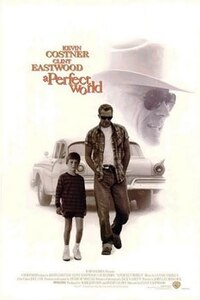
A Perfect World


I must say that I loved parts of this film. The majority of the scenes between Costner and the young boy were very interesting and unique. The strange dynamic of the ole Stockholm's syndrome takes effect, but the reasons behind it are what make it so interesting. It's also interesting because it takes place with a criminal on the lam and the young boy he took from his house for the ride.

Costner has that reputation for being a bland actor, but I enjoy the guy. I love Field of Dreams. I enjoy Dances with Wolves and so on. I've seen him in bad movies. I've seen him be bad in bad movies. But seeing him as a good/bad guy in A Perfect World gave me new respect for the man as a performer. It's a very good performance, perhaps his best. I marveled how the writer, director Clint Eastwood, and Costner pushed and pulled the audience in relation to Costner's character. He's frightening at first, being a criminal with a gun and all. However, the audience can see he's not all bad as he keeps his accomplice in check from committing the mayhem that character seems destined to commit. Then he takes the kid under his wing, playing the father and the friend when it seems his character never had one before, never a good one anyway. I warmed up to the guy. He seemed good enough. Then, as soon as my comfort with the character had been cemented, the filmmakers choose to make me frightened again and wary of how easily I had been charmed. That choice ends up getting out of hand a bit, but I was impressed with the skill it took to make and start to execute it. I'll get to that moment later.

I like the way the movie incorporated a lost boys type attitude to the main characters - Costner's Butch and Phillip the boy. Each was a man lacking in a father's loving touch. Something that seems so obvious, so straight-forward ended up constructing such interesting characters. You cannot say otherwise when it comes to Butch and Phillip.

There were things that bothered me, namely Clint Eastwood's character and his law enforcement gang's pursuit of Costner's character. I never found that storyline interesting. It was full of Clint Eastwoodiness. He just was so grizzled, cranky, old and wise, tough, but sweet natured under it all that I got a little bored in his scenes. I've seen him do it before. It seems that for the last fifteen years or so, that's all the veteran actor does. I understood the storyline as being a key way of revealing things about Costner's character and his past in a naturally occurring way, but I didn't really get involved in it. I didn't really invest myself in any of those characters that included Laura Dern's.

Another thing that bothered me was the hijinks moments. Some interactions were funny, good-humored bits of time. Others were too light to be in this kind of movie. I half expected for the old The O.C. hijinks music to start pouring through my speakers. That's not a good thing. Clint Eastwood's storyline gets the bulk of the hijinks that allow him to show off his typical aforementioned character traits.

And that ending. That's what I mentioned earlier. It goes on too long. It starts out with a bang - great tension, higher stakes, a bit of exciting character twists, and so on. But then it keeps going. Clint Eastwood shows up with his law enforcement gang and they get to muck it up. The somewhat overly dramatic catalyst at the end in what seemed justifiably dramatic is a head scratcher. The scene was set up for a big finish that would propel the film into memory and provocation of emotions, but Eastwood punches it too much. I never really pegged him as a subtle actor or director (and I like him as both in most) but I don't think I expected him to let it get so out of hand. It goes on too long, it involves a punch line from his character in a moment utterly lacking in humor, and so on.

But I would watch it again, if for no other reason than to spend time with Costner and the boy on their trip to friendship together. It sounds corny, but it was a thoroughly entertaining one.

***

Sunday, August 19, 2007

Waitress


It has been a good week for movie watching. I caught Waitress a few hours after watching Once. Each are excellent films with winning qualities. It's wrong to label Waitress as a romantic comedy. It's really a character piece. It's about Jenna the waitress, everybody else is just a part of her life. She was a wonderful character to spend time with. It helps that she's very funny, as is the film. Laugh out loud. And in ways I didn't quite expect.

Waitress is a charming little comedy with wonderful characters and performances. I was all about Keri Russell. She's spitfire, man. All woman.

I've seen her pine for a better life, but never in such a defeated way. Her Jenna is stuck with an awful husband who is both intimidating and menacing while remaining incredibly needy. I cringed every time he touched Jenna. I wanted to save her. But she didn't need saving. She said so herself. Russell also handled dialogue very well. She has many wonderful conversations in the movie, and she always manages to steal each one out from under the other talented performers around her. It's a memorable performance I'll be talking about for some time.

This movie is about finding happiness. Sometimes, it means messing up. Sometimes it means settling. Sometimes it means saying no to what you thought it was. Sometimes it means...well, you get the idea. Lots of definitions unique to each person.

I liked the feel of the movie. It was sweet and sassy, and sometimes dark. Jenna basically hates her unborn child and curses her every once in a while. I did feel bad for her while she felt bad for herself. And I rooted for her. I really rooted for her. I wanted her to be happy.

SPOILERS SPOILERS

When she found happiness, she found strength. It was so unexpected that I appreciated it all the more. The final scene with Jenna walking hand in hand with her little girl was priceless. It was so unusual to feel so happy walking out of the movie after Jenna had been so unhappy for much of the film. The happiness she found was abrupt, a 180 move. But I believed it because the filmmakers and Russell sold it so well. I didn't believe her husband would fold so easily afterwards, but I appreciated the way she found strength when she found love. Real love. Not the kind she had with her equally charming doctor played by Nathan Fillion. It was interesting to see the two become intoxicated with each other because the film didn't really dwell on the fact that both were committing adultery. Rather the film chose to focus on how each fulfilled a missing part of each other for a spell.

END SPOILERS END SPOILERS

I also liked how the film realistically portrayed how people rationalize doing things that are considered wrong. And I didn't blame them. They convinced me.
These people have to work things out for themselves. No amount of preaching is going to fix things for them.

I can't really complain about anything about the film. It was a great way to spend an evening.

****